Knockoff in the news
Knockoff launched on July 7, 2026 and has been covered by 15 publications since. Everything below is here so you don’t have to email for it. If you still need something, that’s what the address is for.
[email protected]The short version
Written to be pasted.
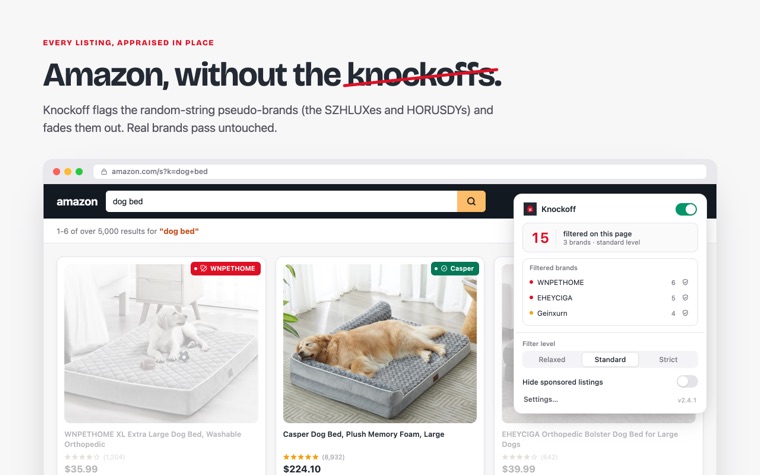
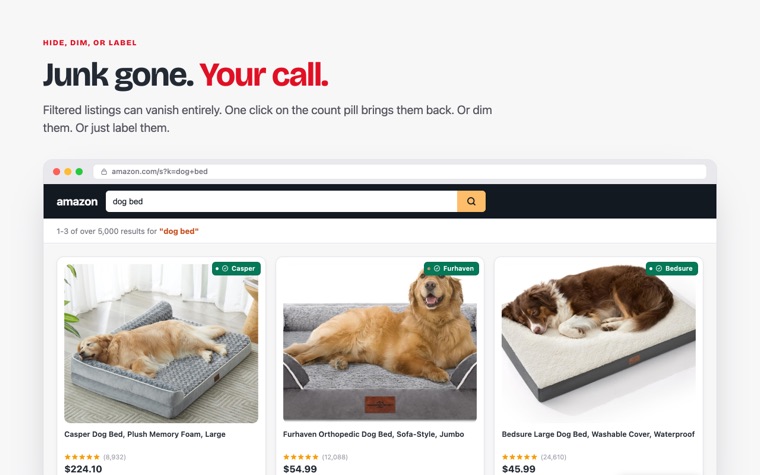
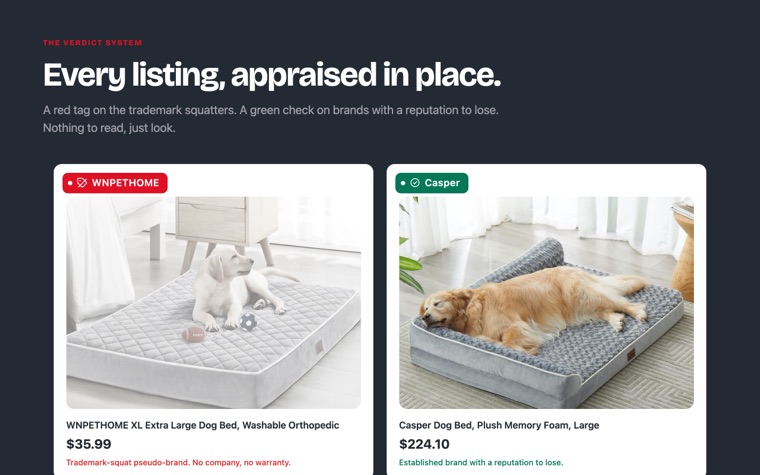
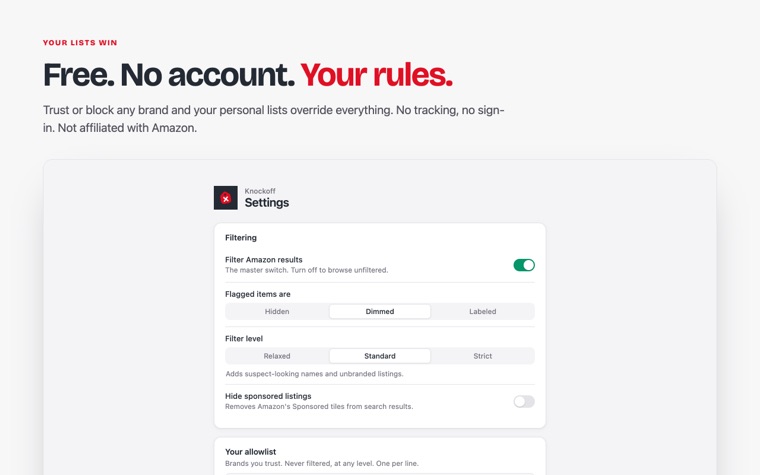
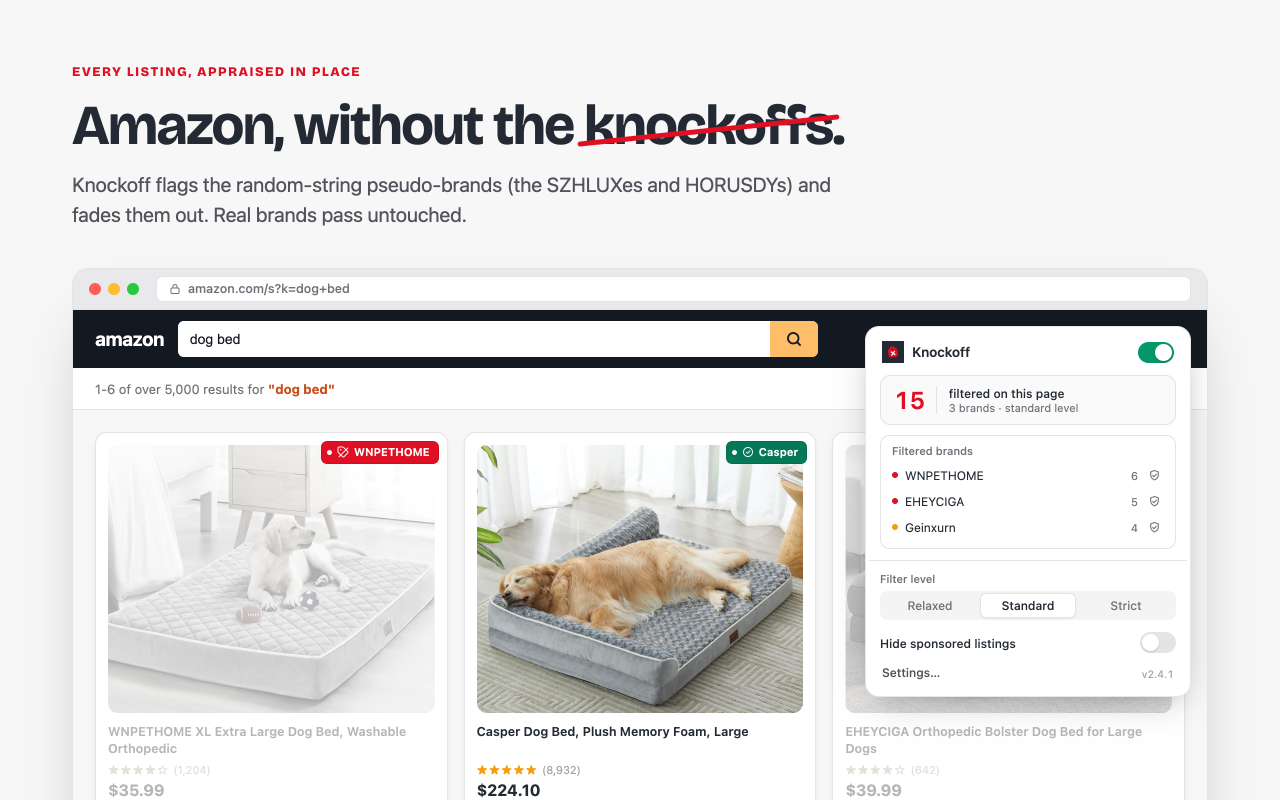
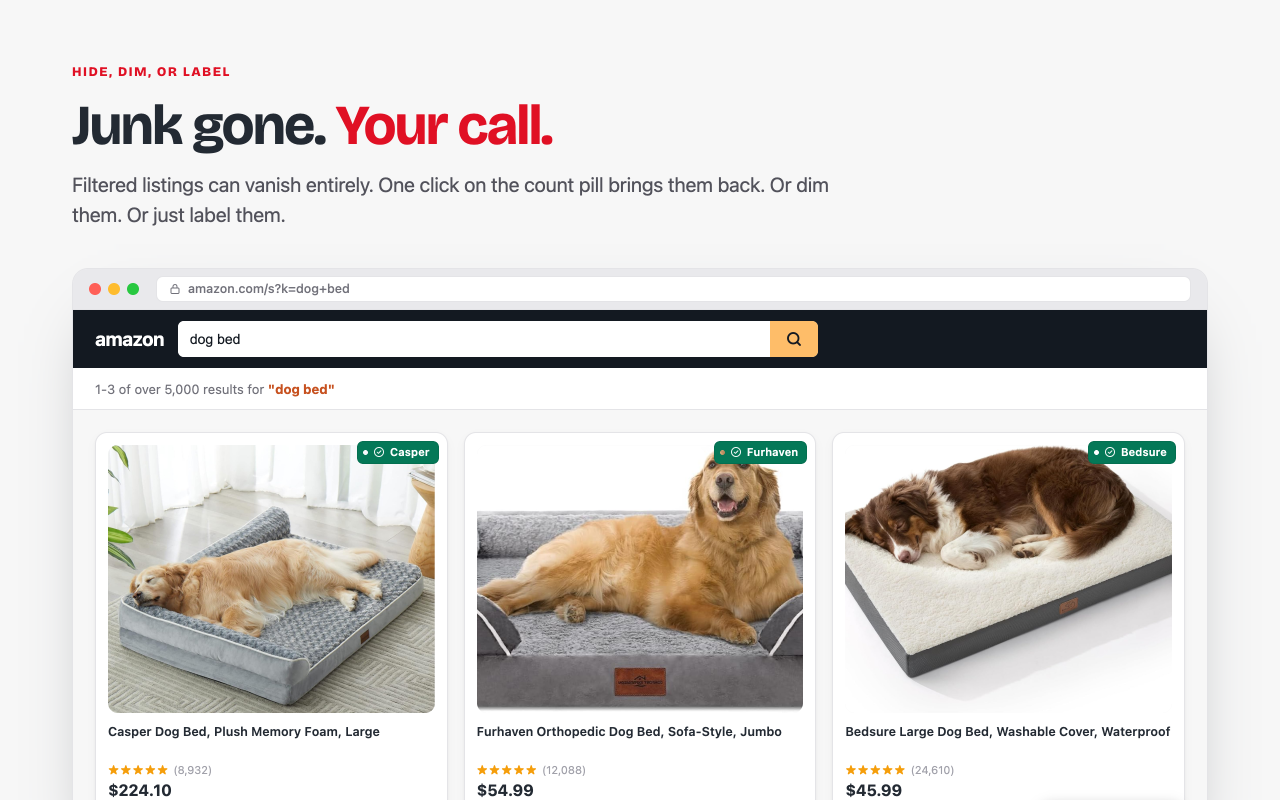
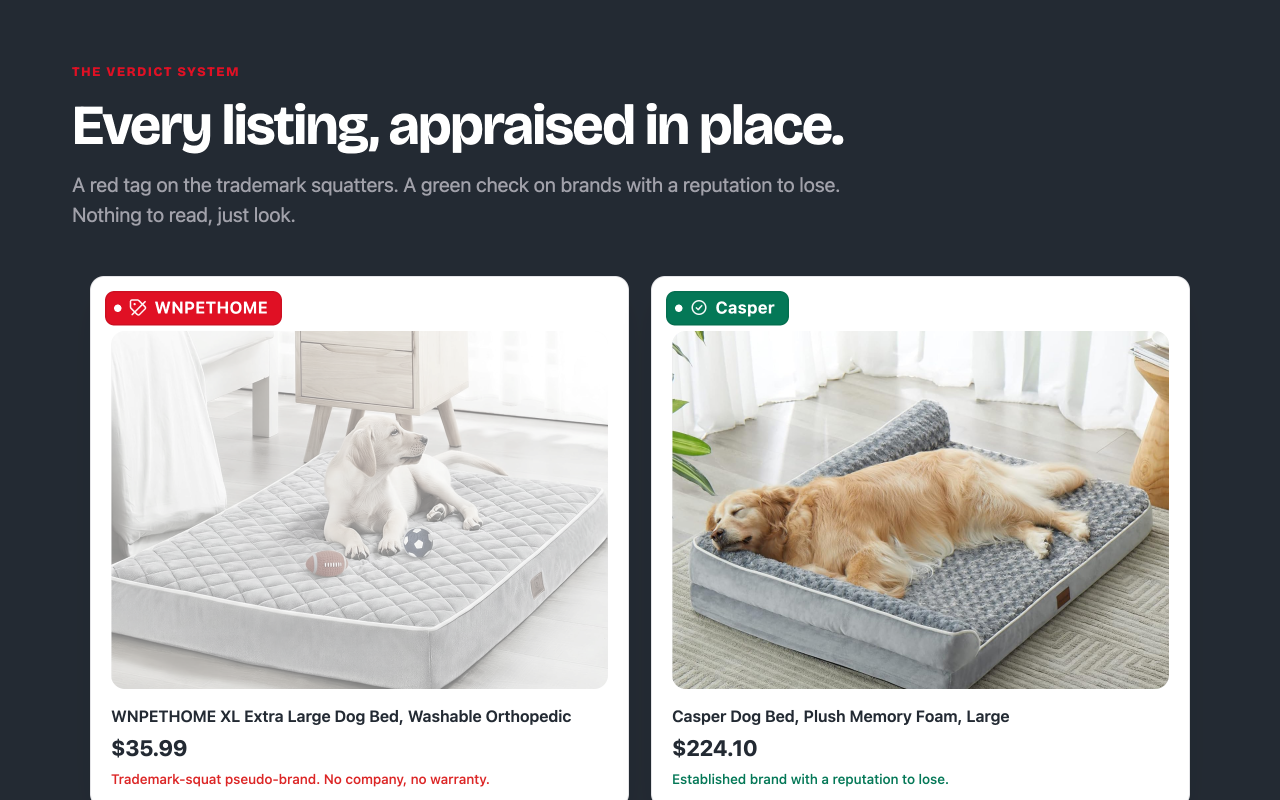
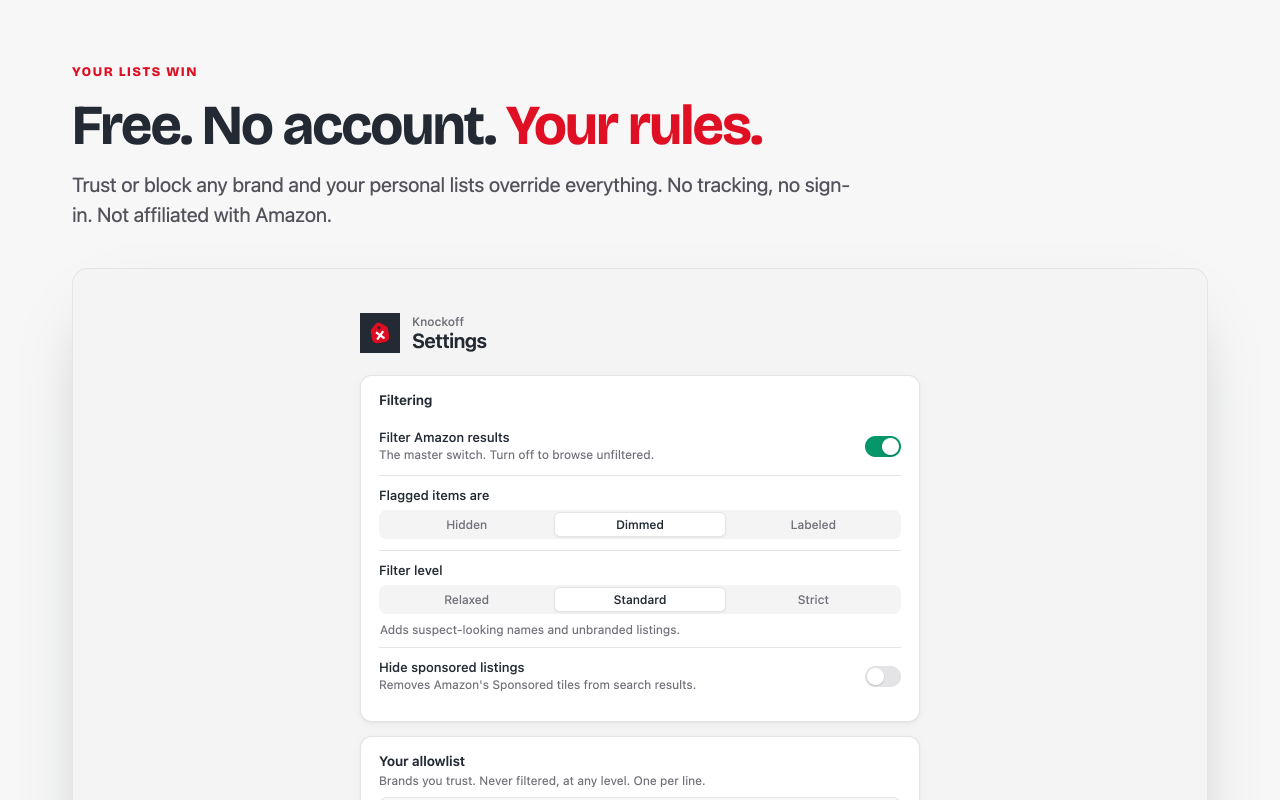
Knockoff is a free browser extension that filters trademark-squat pseudo-brands out of Amazon search results. Every listing’s brand is checked against a shared list of real brand names that shoppers extend every day and that refreshes daily to every install, and names nobody recognizes are scored on the linguistic signature of pseudo-brands: all-caps squat-length strings, vanishing vowels, unpronounceable consonant runs. Flagged listings are hidden, dimmed, or labeled, whichever the shopper picks, and every verdict is one click from being overridden. Knockoff also maps where sellers are actually based, from a corpus of 771,000+ Amazon sellers, and on Etsy it tests whether a listing’s handmade claim holds up. It runs on Chrome, Firefox, and Safari across all 23 Amazon marketplaces, is free, needs no account, and is made by Knockoff Data LLC.
- Launched
- July 7, 2026
- Installs
- Over 100,000, across Chrome, Firefox, and Safari.
- Rating
- 4.8 out of 5, from 130 Chrome Web Store ratings.
- Seller map
- 771,000+ Amazon sellers seen, 225,000+ with a confirmed country. A location only publishes once two shoppers on two networks independently report the same one.
- Coverage
- All 23 Amazon marketplaces, plus Etsy.
- Browsers
- Chrome, Firefox, and Safari on macOS, iOS, and iPadOS.
- Price
- Free. No accounts, no premium tier, no trial.
- Company
- Knockoff Data LLC. Founded by Josh Pigford.
Figures as of July 26, 2026. Ask and we’ll source any of them, or get you a fresher number.
In the news
Newest first. Every link has been opened and checked.










Brand assets
Editorial use is fine, no permission needed. Please don’t alter the logo or use it in a way that suggests we endorse a product.



Getting it right
Five things that get muddled in coverage. The distinctions matter to us, and the first one is the whole story.
Pseudo-brands, not counterfeits
The names Knockoff flags are real trademarks, legally registered, sitting on commodity goods. That is a different problem from counterfeiting, and a more interesting one. Knockoff makes no claim about whether any product is a counterfeit.
Not a review checker
Knockoff does not grade reviews or judge whether they are fake. That was Fakespot’s job and it is a different category of tool. The one place review data enters at all is Etsy, where the count on a listing reads as a volume signal (100+ reviews on a shop that opened months ago), never as testimony about whether a product is any good.
The verdicts are heuristics, not ground truth
Unknown names are scored, and scoring is fallible. Filtering a real brand is treated as the worse failure, so the tuning is deliberately cautious. Every verdict is one click from being overridden, and misclassification reports reach every install within a day.
Country filters, but only when asked
Listings show where a seller is based, and a shopper can choose to hide sellers from specific countries. That list starts empty, lives only in their browser, and when it is set those listings are hidden outright rather than dimmed. What country never does is feed the automatic brand verdict. The appraisal is about disposability, not geography, and plenty of established brands manufacture where the junk does.
Etsy asks a different question
On Amazon the question is whether a brand name is a trademark squat. On Etsy it is whether a listing’s handmade claim survives contact with the shop’s own public facts: age, sales velocity, catalog scale, duties-paid shipping language, and whether the photos turn up in a mass-market catalog. In the browser that produces a suspicion with its reasons attached, never a conviction.
Questions, interview requests, or a fact you want checked before you file: [email protected].